Research
On-going Research Projects
| Project No. | Years | Project Title | PI |
|---|---|---|---|
| RESEARCH PROJECTS ON CROP IMPROVEMENT | |||
| Mega theme- Soybean genetic resource management- Acquisition, conservation, characterization, documentation and utilization | |||
| NRCS 1.1/87 | 1987-LT | Augmentation, management and documentation of soybean germplasm |
|
| Mega theme- Genetic improvement of soybean for yield, agronomic traits, resistance to biotic stresses and improvement in quality of soybean seed | |||
| IISR 1.33/16 | 2016-LT | Development of YMV resistant soybean varieties using marker assisted selection |
|
| IISR 4.3/23 | 2023-2028 | Enhancement of seed longevity of vegetable soybean (Glycine max L. .Merr.) genotypes |
|
| IISR 4.4/23 | 2023-2031 | Breeding for high grain and oil yield for different maturity duration in soybean |
|
| IISR 4.5/23 | 2023-2031 | Soybean breeding for resistance against charcoal rot and anthracnose diseases |
|
| IISR 3.12/19 | 2019-2024 | Soybean Improvement against defoliating insects |
|
| IISR 4.6/23 | 2023-LT | Pre-breeding for broadening of genetic base in soybean |
|
| Mega theme- Managing the impact of current and future climate variability in soybean | |||
| DSR 5.6a/08 | 2009-LT | Breeding for drought resistance / tolerance varieties in soybean |
|
| IISR 7.8/23 | 2023-2028 | Trait identification and physiological breeding for water logging tolerance in soybean |
|
| ISSR 3.16/21 | 2021-2026 | Identification of genes/loci for better root system in soybean |
|
| Mega theme- Development of specialty soybean varieties for secondary agriculture and industrial uses | |||
| NRCS 1.12/02 | 2002-LT | Breeding for food grade characters and high oil content |
|
| IISR 3.15/2020 | 2020-2024 | Development of genome edited soybean lines with improved oil quality |
|
| RESEARCH PROJECTS ON CROP PROTECTION | |||
| Mega theme- Surveillance, forecasting and control strategies for insect pest complex in soybean | |||
| IISR 6.10/22 | 2022-2027 | Soybean Improvement against Rhizoctonia aerial blight disease |
|
| IISR 3.13/21 | 2021-2024 | Isolation and identification of kairomones and sex pheromones components for soybean stem fly, Melanoagromyza sojae management |
|
| RESEARCH PROJECTS ON CROP PRODUCTION | |||
| Mega theme- Development of technologies for soybean based cropping system efficiency enhancement through resource conservation technologies, nutrient management. plant growth promoting microbes and farm machineries | |||
| IISR 3.12/2020 | 2020-2024 | Interaction effect of phytohormones and AMF for enhanced nodulation, growth, yield of soybean with improved AMF symbiosis in the rhizosphere |
|
| IISR 6.9/17 | 2017-2020 | Bacterial mediated sulphur bioavailability in soybean |
|
| IISR 6.10/23 | 2023-2028 | Standardization of sustainable (Natural/Organic farming/Conservation agriculture) management practices for soybean yield maximization under soybean based cropping systems |
|
| IISR 4.13/17 | 2022-2027 | Evaluation of residue management practices under permanent broad bed furrow as well as conventional tillage practices for sustaining/ improving resource use efficiency, soil quality and crop productivity in soybean-based cropping systems |
|
| RESEARCH PROJECTS ON EXTENSION | |||
| Mega theme- Information digitization, technology dissemination, impact analysis and socio-economic research for soybean | |||
| DSR 7.7/23 | 2023-2025 | Development of Seed and Product Sale Portal for Online marketing in Soybean. |
|
| IISR 8.17/20 | 2020-2025 | Development and evaluation of ICT tools and medias for TOT of Soybean |
|
| IISR 8.18/23 | 2023-2033 | Use and effectiveness of various extension programme for TOT of soybean/td> |
|
External Funded Projects
| Project No. | Years | Project Title | PI/Co-PI |
|---|---|---|---|
| DAC, Government of India | 2005-LT | DUS testing of soybean-Central sector scheme for protection of plant varieties and farmers right. |
|
| ICAR | 2006-LT | ICAR Seed Project - Seed Production in Agriculture Crops |
|
| DAC, Minister of Agriculture | 2018-2023 | Creation of Seed Hubs for enhancing quality seeds availability of major oil seed crops under NFSM-Oil Seeds |
|
| SERB, DST Govt. Of India | 2022-2025 | Genomics strategies for improving anthracnose resistance in soybean (Glycine max L.) |
|
| DBT, Government of India | 2022-2025 | Expansion of Activities of Biotech-KISAN Hub in Eight Aspirational Districts in Madhya Pradesh – Phase II |
|
| SERB, DST, Govt. Of India | 2021-2024 | Genome- wide association mapping of charcoal rot resistance in soybean (Glycine max L.) |
|
| BRNS, BARC, Mumbai | 2022-2025 | Development of high oleic acid mutants of KTi and lox2 free soybean gamma and electron beam |
|
| DBT Government of India | 2021-2024 | Developing food-grade soybean using CRISPR/Cas9 mediated multiplex genome editing |
|
| NASF, ICAR | 2022-2025 | Marker assisted stacking of yellow mosaic disease resistance, null Kunitz trypsin inhibitor, null lipoxygenase-2 genes, and broadening the genetic base of soybean |
|
| DBT Government of India | 2022-2025 | Marker assisted introgression of seed weight, early maturity and photoperiod response genes in multiple stress tolerant climate smart soybean variety JS97-52 and KTI free variety NRC 127 |
|
| NASF, ICAR | 2023-2026 | Targeted improvement of stress tolerance, nutritional quality and yield of crops by using genome editing |
|
RESEARCH ACHIVEMENT OF CROP IMPROVEMENT
ICAR-NSRI, Indore serves as the National Active Germplasm Site (NAGS) for soybean in India. The medium-term storage currently conserves 6,120 germplasm accessions, including a core set of 1,000 accessions. It also preserves 167 wild Glycine soja accessions from the primary gene pool and wild accessions representing 10 species from the tertiary gene pool. Additionally, a trait- and allele-specific set comprising 170 accessions is maintained.
-
A total of 13 genetic stocks have been registered, namely: NRC 101, NRC 102, NRC 109, JS 20-38, EC 34101, EC 390977, MACS 330, AGS 25, NRC 252, YMV 16, EC 34372, JS 20-34, and NRC 285.
-
A total of 19 varieties were developed since 2015 including short duration (90 days NRC 130, NRC 131, NRC 165, NRC 157, NRC 138); normal maturity (102 days NRC 86, NRC 128) and special trait varieties (NRC127, NRC181, MACSNRC1677 ( Kunitz trypsin inhibitor free). NRC150, NRC132 (lipoxygenase-2 free) double null i.e.e both lipoxygenase-2 and Kunitz trypsin inhibitor free ( NRC142 and NRC152), high oleic acid ( NRC147 and vegetable soybean (NRC188) Drought tolerance (NRC 136) YMV tolerance (NRCSL-1).
-
Identified promising donors for resistance/tolerance against various insects namely Spodoptera litura, stemfly, and girdle beetle.
-
Genes imparting resistance to Mungbean yellow mosaic India virus (MYMIV) in soybean identified and introgressed in the most popular variety JS335 using markers assisted breeding.
-
Regeneration and transformation protocols for Indian soybean varieties have been standardized and are being used for genome editing of various traits.
-
Genome wide association studies (GWAS) identified 20 significant loci and key genes for days to flowering and maturity. Key candidate genes are Glyma.03G227300, Glyma.03G225000, Glyma.03G219100 and Glyma.03G226000. These genes are vital for light-response and developmental pathways. In addition eight previously known genes E2, E4, E9, E11, E10/FT4, PRR7/Tof12, Dt1, and Dt2 that influence flowering and maturity in Indian environment were validated.
-
Three key NBS-LRR genes associated with Rpp1 rust resistance were identified using whole genome sequencing and comparative genomics studies.
-
New bioinformatics tool was developed for clustering of huge soybean SNP dataset.
-
Identified and validated a QTL qSW10.1 for seed weight and a QTL qRoot10.1 for root length in soybean.
-
Developed two multi-trait allele specific SNP marker assays in soybean.
-
Developed KASP assays for flowering, maturity, growth habit, seed weight, KTi, root length, and seed yield traits.
-
GWAS analysis successfully pinpointed two highly significant SNPs on chromosome 16 and three SNPs on chromosome 7, collectively identifying key genomic regions associated with resistance to Spodoptera litura in soybean.
-
Pre-breeding utilizing Glycine soja led to the development of eight BC₃F₂ populations aimed at improving rapid grain filling and disease resistance.
-
Developed improved seed treatment technologies for soybean. Seed treatment in combination of salicylic acid, Molybdenum and Boric acid improve field emergence, plant growth, yield and storage potential of seeds.
-
Seed polymer coating with Pyraclostrobin and Thiophenate methyl, Carboxin and Thiomethoxam improves soybean seed germination, plant growth, reduce disease and insect infestation, maintain plant health thus increasing seed yield..
-
Application of nano-zinc and maganesium particle to seeds through polymer coating at improves germination at the tune of 12%. Application of nano-zinc and magnesium particle to seeds through polymer coating increased yield significantly (17%).
-
100% gluten-free, very high-protein soy-based laddoo and gluten-free meat analogue kababs developed.
-
Natural additives, viz., emulsifier, foaming agent, binder, coating agent prepared from modified soy protein.
-
Ready to eat snacks: Soy sev, Soy chakli, soy cookies, soy mathri, soy namakpare.
shakarpare and Ready to cook items: Soy upma, Soy Halwa, Frozen okara bhajie, and cutlet.
-
Technologies improved: soy nuts, soy milk, tofu, soy dahi, soy shrikhand and Other technologies: shelf-stable soy flour, shelf-stable soy okara.
Regeneration and transformation protocols for Indian soybean varieties have been standardized and are being used for genome editing of various traits.
-
Good Agronomics Practices Standardized: Field Preparation, Sowing Time, Sowing Methods, Plant Germination, Fertilization, Tillage, Weed Management, Harvesting, Processing, Packaging, Storage, GIS Digital Map
-
Fertigation at flowering, pod initiation and seed filling (50% RDF as basal + 50 % RDF through fertigation) recommended for soybean.
-
Recommended lime @ 600 kg/ha with FYM @ 2.5 t/ha for the reclamation of acidic soil in the Northern Eastern Zone.
-
Seed inoculation of biofertilizer (Rhizobium + MDSR14 + 12c+75%RDF) in central zone and 75% RDF + Bio-NPK or Bio- NPK + Bio-Zn or Rhizobium + MDSR14 + 12c in southern, north eastern hill and northern plain zone improved soybean yield by reducing 25% RDF.
-
Planting geometry 45 × 10 cm for soybean in Central Zone, Northern Plain Zone and North Eastern Zone & 45 × 5 cm for soybean in Southern Zone were recommended.
-
Thiourea spray @ 750ppm at 20 -25 and 50 -55 days after sowing improves soybean yield by alleviating drought stress.
-
The inclusion of maize in crop rotations was found beneficial over continuous soybean mono-cropping. The minimum tillage is beneficial over conventional tillage in soybean production.
-
Omission of weed management from the full package reported the highest yield gap followed by omission of either RDF (Recommended Dose of Fertilizers) or pesticide application.
-
Permanent broad-bed furrow with residue retention improved the seed yield (20%) and economics of kharif and rabi crops over conventional tillage without residue retention under a soybean-based cropping system.
-
Identified remunerative cropping system: Soybean-Potato-Late wheat under a conservation agriculture system.
-
Standardized soybean intercropping with sugarcane (2:1) system to get additional benefit for sugarcane farmers during the spring season.
-
Identified 3 genotypes (G3, G20 and G30) suitable under conservation agriculture system.
-
Standardized natural farming practices for soybean-based cropping systems.
-
Developed integrated crop management and organic farming package for soybean-based cropping systems.
-
Developed the standard package of practices for summer soybean seed productions.
-
Developed micronutrient management practices for the soybean-wheat cropping system: Soil application of ZnSO4+FeSO4 7H2O @ 25+50 kg ha-1 as basal, seed inoculation of microbial strains (Bacillus aryabhattai + Bacillus endophyticus) @ 10g kg-1 seed and foliar application of ZnSO4+FeSO4 7H2O (0.50%+1.0%) with 0.2% lime at before flowering, maximum flowering and seed filling stage is recommended to enhance crop productivity, profitability, soil health and crop quality.
-
Evaluated and recommended five new herbicides (PIX 10042 76.75% WG, RIL 202/F1 35.9%SE, CIX 404 20% EC, FH 2204 (Bixlozone 40% WG + Sulfentrazone 28% WG), CIX 4116 39.5% SE) for effective weed control and improved productivity in soybean crop.
-
Developed a comprehensive GIS-based digital maps for identifying soybean potential areas across all Indian states (district level) using Multi-Criteria Decision Analysis (MCDA).
-
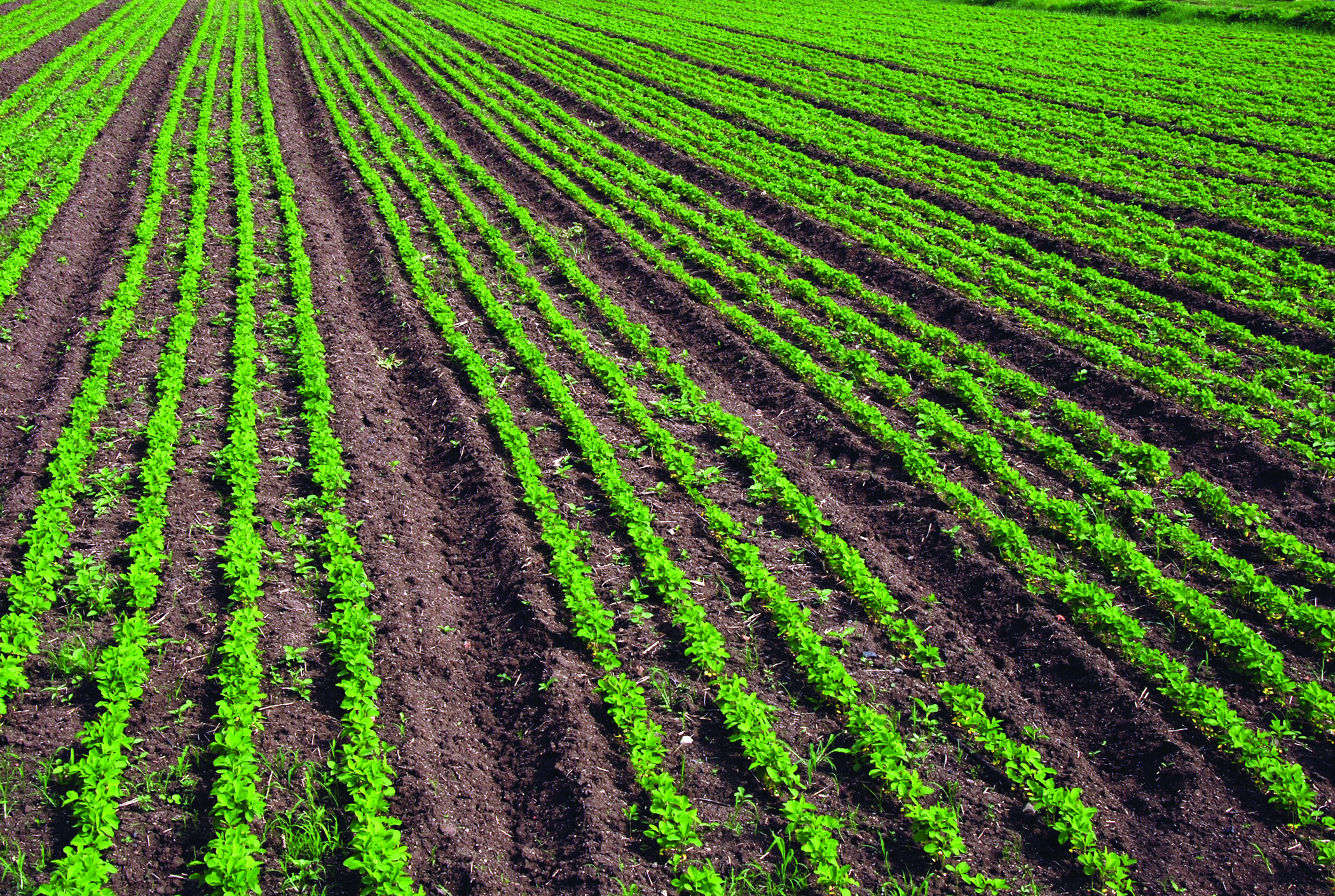
Developed improved production technologies for sustainable soybean production.
-
-
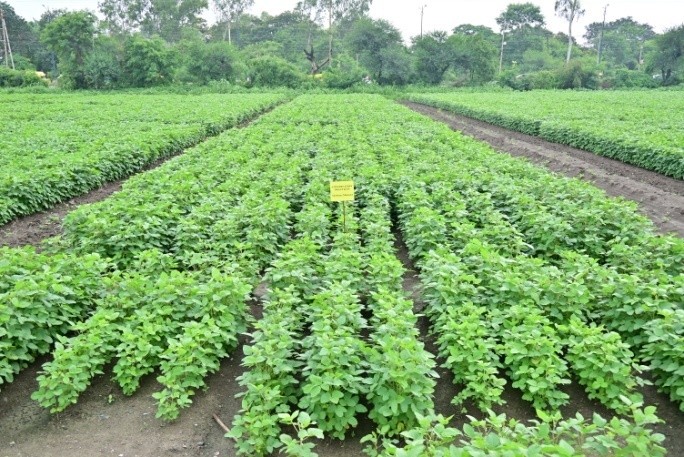
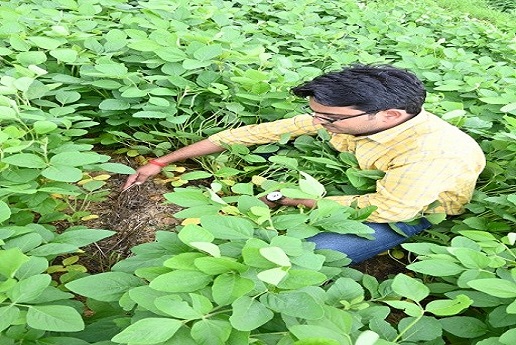
-
Identified and characterized Bacillus aryabhattai–related zinc-solubilizing isolates that mobilize native soil zinc, enhance crop growth and yield, and represent the first such reports from soybean rhizosphere in India.
-
Demonstrated that selected Bacillus isolates (BD-3-1B, KHBD-6, BDKH-3, B. amyloliquefaciens, B. cereus) enhance soil enzyme activities, soybean yield, P-nutrition, and reduce seed phytic acid-P.
-
Established Pseudomonas aeruginosa GRP3 and P. synxantha HHRE81 as promising bioinoculants for soybean–wheat systems, improving yield and nutrient uptake.
-
Discovered Bacillus aryabhattai as an efficient phytate mineralizer and phosphate solubilizer, improving soil P-availability and enhancing growth, yield, and P-content in soybean and wheat.
-
Isolated Enterobacter cloacae subsp. dissolvens MDSR9 with multiple plant-growth-promoting traits, improving soybean and wheat growth and nutrition.
-
Developed a culture collection of Fe-, Zn-, and P-mobilizing rhizobacteria covering about 20 strains (e.g., Bacillus, Pseudomonas, Enterobacter, Acinetobacter, Burkholderia strains etc., ) deposited at NCCS and NBAIM, Mau for public use demonstrating their potential for biofertilization and biofortification in soybean and wheat.
-
Findings clearly indicate that owing to higher biological activity, organic systems possess equal capabilities of supplying P for crop growth as are conventional systems with inputs of mineral P fertilizers.
-
The salient findings indicated that the highest seed, straw yield, N, and S uptake were obtained with the application of N25+25, S25+25 in soybean. The highest N use efficiency was recorded with the application of N25+S50, and S use efficiency with the application of N25+25, S25+25..
RESEARCH ACHIVEMENT OF AGRONOMY
RESEARCH ACHIVEMENT OF SOIL SCIENCE
Management of soybean diseases
Integrated management schedules of root, seed and foliar diseases (charcoal rot, collar rot, rust, Myrothecium leaf spot, bacterial pustule, yellow mosaic etc.) have been worked out. Strain variation in Sclerotium rolfsii and Xanthomonas axnopodis pv. glycines has been established. Varieties/lines resistant to major diseases have been identified. Trichoderma viride and Pseudomonas fluorescens have been found effective for the management of collar and charcoal rot. A few natural plant products like Lawsonia, Tagetes and Acacia were found promising for the management of Myrothecium leaf spot.
Management of soybean insect-pests
Integrated Pest Management for soybean has been standardized and demonstrated in farmers’ fields. To facilitate scouting and monitoring, management of spray application, and assessment of likely damage, a month wise calendar of insect-incidence has been prepared. Effective chemical insecticides have been identified and recommended. Microbial insecticides, based on Bacillus thuringiensis and Beauveria bassiana, were found effective for the management of defoliators. On the basis of large scale field screening and laboratory screening, sources for insect resistance have been identified and are being used for developing insect-resistant varieties.
Research Achievements of Plant Pathological Technology
Twenty-three diseases identified and classified in to major and minor based on their distribution economic significance. Myrothecium leaf spot, Alternaria leaf spot, rust, collar rot, pod and stem blight, anthracnose and pod blight, bacterial pustule, yellow mosaic and no podding syndrome were classified as major.
Yield loss estimation revealed a reduction of 14% by bacterial pustule, 48% by Myrothecium leaf spot, 80% by Indian bud blight, 63% by rust, 51% by Alternaria leaf spot and 36-80% by purple seed stain and 64% by stem and pod blight caused by C. truncatum.
A positive correlation of seed infection category of purple seed was observed with seed coat rupture, number of dead seeds and negative with seedling length, test weight, SSLI germination and number of normal seedlings.
Experiments have proved that bold seeds in comparison to small and shriveled seeds upon seed treatment with thiram and carbendazim resulted in reduced seedling mortality and increased seedling emergence and yields.
Seed borne diseases viz, bacterial pustule, Myrothecium leaf spot, Alternaria leaf spot , purple seed stain, anthracnose and pod blight and other diseases like Indian bud blight and rust severely affected field germination (ranging from 20 to 100%), and per cent loss in seed germination was positively correlated with percent seed borne infection.
Studies on some of the epidemiological aspects of bacterial pustule, Myrothecium leaf spot, Indian bud blight, Alternaria leaf spot and rust have been taken up.
Primary source of rust inoculum for south India is lying in the bank of Krishna River and its tributaries in the districts of Kolhapur, Sangli, Satara and Belgaum. Self-sown and winter-sown sole or intercrop soybean in irrigated areas might be harbouring rust pathogen in off-season and acting as a source of primary inoculum for rainy season soybean crop. There may be little or no role of collateral hosts in the initiation of rust. Four hot spot areas in Maharashtra and Karnataka have been identified where rust appears first and from here rust spread to other areas. Study clearly indicated that it is not the amount of rainfall but high relative humidity and congenial temperature, which are the main guiding factors for the onset and spread of rust. Study involving differential hosts and morphological parameters of urediniospores indicated presence of different races of rust.
Species of Colletotrichum, Septoria, Fusarium and Alternaria were found associated with cotyledonary spots.
Forty two isolates of Sclerotium rolfsii classified in to 6 groups based on cultural characteristics, sclerotial formation and morphology, and pathogenicity.
Sixty-five isolates of Xanthomonas campestris pv glycines from different agroclimatic zones of India were isolated and twenty out of them were characterized on physiological and biochemical basis.
On the basis of pathogenicity 15 isolates of Colletotricum truncatum isolated from different agroclimatic zones were grouped into six pathotypes..
DNA has been isolated from the different isolates of C truncatum.
The growth of Sclerotium rolfsii in the medium containing sulphur, zinc, copper, iron, manganese and calcium was better. A pH of 6.5 and 350C temperature was most favourable for the growth and formation of sclerotia. Soil amendments with cotton oil cake, farmyard manure, biogas slurry and soya de oiled cake were promising in reducing pre-and post-emergence mortality caused by Sclerotium rolfsii.
Multiple disease resistant lines/varieties like PK 262, PK 327, PK 471, PK 695, PK 1169, PK 1243, PK 1251, SL 432, SL 459, SL 517, SL 528, TS 99-128, JS 71-05, JS 72-280, JS 75-46, JS 76-206, Bragg, Punjab 1, MACS 58, MAUS 52-1, VLS 2, Monetta, JS (SH) 91-33, JS(SH) 93-01, Himso 1569, NRC 35, NRC 41, NRC 44, RAUS-3, RSC 1, RSC 3, AMS 243, AMS 358, AMS 56, JS 20-29, SL-958, MACS 1336, DS 2614, DS 12-13, PS 1042, SL 688, JS 20-69, JS 20-89, SL 955, SL 983, MACS 1410, MACS 1407 and RVS 2002-4 have been identified.
Rust resistant/tolerant varieties/lines like, PK 1024, PK 1029, JS 80-21, C3P27, JS 90-225, PK 1197, RSC 2, EC 389170, EC 389178, EC 241778, EC 241780 and and DSb 21, DSb 23-2, Phule Kalyani and KDS 726 have been identified.
Varieties/lines resistant to bacterial pustule including germplasm lines viz. EC 389150, EC 389164, EC 390981, EC 390989, EC 390975, EC 390976, EC 390977, EC 391152, EC 391172, EC 391181, EC 393222, EC 393223, EC 393225 and EC 393237 have been identified. Similarly varieties/lines resistant to myrothecium leaf spot, collar rot, soybean mosaic, Indian bud blight have been identified.
On the basis of multi-year and multi-location screening AMS 243, AMS 358, AMS 56, JS 20-29, SL-958, MACS 1336 were identified as potential sources for resistance to Charcoal rot and DS 2614, DS 12-13, PS 1042, SL 688 for RAB & YMV.
Intercropping with maize and sorghum and pearl millet in 4:2 ratio, sowing up to 10th July, spacing of 30 to 45 cm and plant population of 4 lakh plants/ha found promising with less seedling mortality and higher yields. However, with pigeon pea incidence of collar rot increased.
Seed treatment with carboxin + thiram @ 2 g or thiram and carbendazim in the ratio of 2:1 @ 3g/kg seed found very effective for the control of seed and seedling diseases. Result of seed treatment was also encouraging on seeds of poor grade and ungraded seeds. Seed treatment 50 days prior to sowing was found much more effective than at the time of sowing.
Seed treatment with biocontrol agents viz. Trichoderma viride and Pseudomonas fluorescens increased seedling emergence, plant population and reduced pre and post emergence mortality. Consortium of three strains of T. harzianum was also quite effective for the management of charcoal rot and collar rot.
Seed treatment plus soil application of zinc and boron plus irrigation at the time of pod formation was quite effective for the management of charcoal rot.
For the management of foliar diseases two sprays of carbendazim or thiophanate methyl and for rust hexaconazole, propiconazle, triadimefon and oxycarboxin (0.1%) were found effective.
Foliar sprays of carbendazim and mancozeb at R2 and R6 stage increased seed germination and reduced seed borne fungi.
A method was develop to use agrowastes for mass multiplication of bio-control agents Trichoderma.
Trichoderma spp was found to be compatible with seed dressing fungicides like vitavax and thiram.
A web-based soybean disease symptoms, identification and management system has been developed.
Research Achievements of Entomological Technology
Seed treatment with insecticide-fungicide premix (Azoxystrobin+Thiophenate methyl+ Thiomethoxam) @ 10 ml/kg seed for insect-pests and disease management.
Identified kairomones viz., Tridecane, Tetradecane, Naphthelene, Methyl salicylate, Hexadecanol, Cis 3-hexyl acetate and p-Xylene for soybean stem fly management.
Management of soybean defoliators insect-pests with trap crop Suva, Anethum graveolens with 15 soybean:2 rows suva was identified most effective in attracting and followed by management.
Identified soybean as a most preferred crop among green gram, black grfam, frenchbean, cowpea and soybean for stem fly, Melanagromyza sojae.
Assessed the four kind of varietal mixture treatments (JS-9560, JS-20-34, MAUS-47 and MAUS-1460), (JS-9305, JS-2029, RVS-2001-4 and Dsb-28-3), (NRC-86, JS-335, JS-2098 and RKS-45) and (NRC-37, JS-9752, RSC-1046 and RKS-113) against the sole varietal treatments of their respective varietal mixture treatments and was found to be better than the sole varietal treatments both in terms of insect-pests management as well as natural enemies populations.
For management of insect-pests of soybean six microbial insecticide combinations alonwith control viz., Beauveria bassiana (2kg/ha) +Metarhizium anisopliae (2kg/ha), Nomuraea rileyi (2kg/ha) + Bacillus thuringiensis (Bt) (1 kg/ha), Nomuraea rileyi (2kg/ha)+ Metarhizium anisopliae (2kg/ha), Beauveria bassiana (2kg/ha)+ Nomuraea rileyi (2kg/ha), Beauveria bassiana (2kg/ha)+ Bacillus thuringiensis (Bt) (1 kg/ha) and Metarhizium anisopliae (2kg/ha)+ Bacillus thuringiensis (Bt) (1 kg/ha) were tested at Dharwad, Sehore, Kota, Pantnagar Prabhani and Imphal. The treatment, Nomuraea rileyi (2kg/ha) + Bacillus thuringiensis (Bt) (1 kg/ha) was found most effective treatment (2.05 larva/m v/s control 5.08 larva/m) for management of insect-pests of soybean.
Thiamethoxam 70 % WS was identified most effective treatment for whitefly management.
A month wise (July to October) calendar of incidence of insect pests has been prepared to know the seasonal incidence of different insect-pests.
Suitable and effective insecticides were identified and recommended for the management of major insect-pests, through seed treatment and foliar treatment in table given bellow:
Potential donors for insect resistance have been identified through large-scale field screening of germplasm and advanced breeding lines, e.g. EC 251827, EC 383165, EC 389149, EC 457366, EC 458350, EC 251541, EC 280149, EC 357998, EC 389170, EC 291401 and EC 389174, IC 0117899, IC 0618728, EC 117902, CAT 2503 ,EC 0389173, EC 0393228, IC 0243054, IC 0243589, IC 0501471, EC 0109543, EC 0018596, EC 771199, EC 771186, IC 0117899, IC 0096369, IC 0026133, IC 0118578, EC 0026691, IC 0118395, F3P18, G5P22, EC 389174 and EC 0393228. .
Seed treatment and Foliar treatment: Download
Rotary weeder: A tractor-drawn weeding machine for soybean
The newly developed machine is a combination of blade harrow cum tractor operated rotary mechanism through power take off (PTO). During operation, the weeds are cut by the blade followed by pulverization of the soil. Subsequent slashing of weeds is carried out by the rotary mechanism. The new machine is provided with guards for rotary mechanism, which protects the soybean plants from injury by the machine. These guards facilitate operation of the machine even in advanced growth stage. This weeder has also been provided with a “cross mechanism” for lower links of the tractor so as to check or eliminate lateral movement of the machine. A striking feature of this machine is that the narrow tractor tyres of 8.3x32 specifications have been employed enabling the operation of this machine in the standing crop. This machine is efficient and can accomplish weeding in 4 hectares during each working day of 8 hours. This machine can also be used in case of other crops like cotton with a little modification.
Intercrop seed drill for soybean
Intercrops seed drill for planting soybean and recommended intercrop viz. pigeon pea (arhar), maize or sorghum in recommended spatial arrangement of 4:2 row ratio. In operation the middle four rows are planted with soybean, whereas the flanked rows, one each on both the sides, are planted with intercrop. The seed drill has provisions to set the differential seed rates of soybean as well as that of intercrop as recommended/desired. Three boxes have been provided to accommodate fertilizer, soybean seed and inter crop seed separately. To facilitate driving and controlling the seed rates of the crops, three independent shafts have been provided. This intercrop seed drill can bring in a new era of sustainable intercropping for soybean farmers. It is also poised to counteract the risk of failure of one of the crops due to the outbreak of diseases and insects-pests, scarcity of water or unfavourable weather conditions.
Conservation till drill for soybean crop
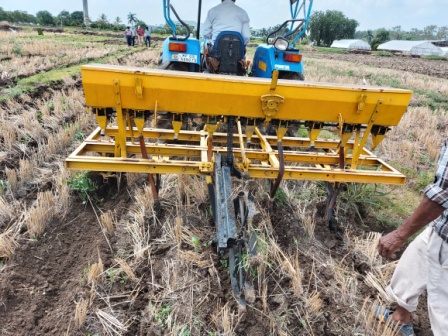
Conservation till drill for planting soybean (5 rows at 45 cm row to row distance) was developed and tested at the centre. It prepares the seedbed and plants the soybeans in one go, thus reducing the extent of tillage and cost of cultivation. The machine is also time and fuel-efficient. The opener for seeding is coupled with duck foot type (width 20 cm) arrangement to work with surface land (about 7-8 cm depth) to facilitate loosening of soil. The machine has also been provided with special mechanism to cover the planted seed rows. This is one go sowing machine for soybean without any other preparatory operation after summer ploughing. The operation of machine simultaneously facilitates weed management also. The post operation condition of the field is akin to the field sown following normal operations. The worked up surface soil functions as soil mulch avoiding moisture loss from the soil.
Key line seed drill
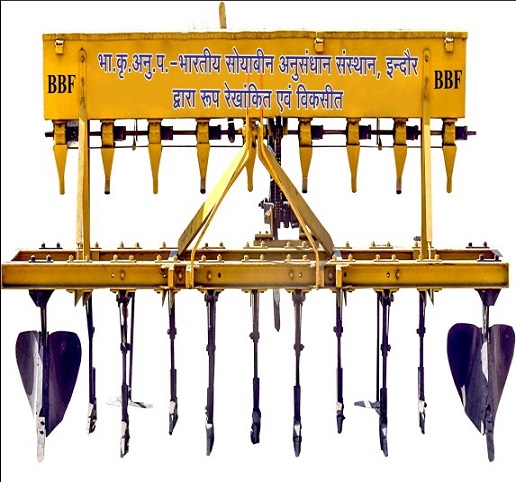
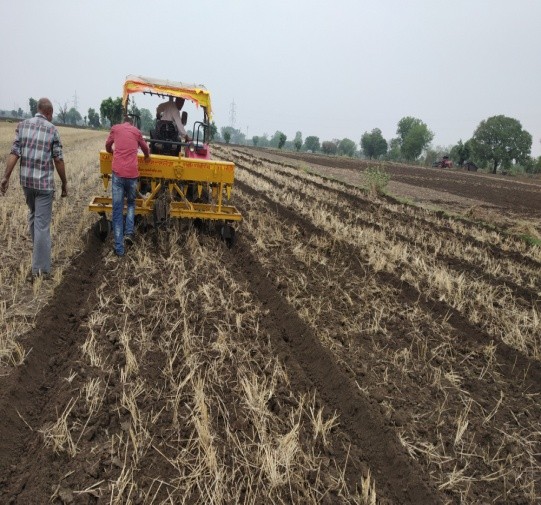
Soybean has major command area in the vertisols of Malwa Plateau of Madhya Pradesh. The region is experiencing deficit and uneven distribution of rainfall creating water stress of different degree affecting the productivity of the crops. To mitigate the ill effect of above phenomenon and conserve adequate soil moisture to support the crop, a key line seeding machine (Photograph 7) has been developed and farm validated at the centre. The machine developed at the centre facilitates planting of five rows at recommended planting distance and simultaneously opens one row each on either side (fresh depth is about 20 cm which turns out to about 15 cm after settling) for facilitating removal of excess water and/or percolation of water in soil. The machine costs Rs. 12000 approximately.
FYM Spreading Mechanism for Tractor Trolley
The attachment provided with rear flap opening screws, which control the rate of spread of manure when hydraulic trolley is run in the field synchronizing it’s lifting. The mechanism draws power through a chain from the wheels of the tractor trolley for crushing and pushing the FYM. Two rotors with flat blades have been provided to crush and push the manure from the trolley. In a day of 8 hours, the machine can spread the manure in 4-5 hectare. This machine shall save manure labour and time for the operation.
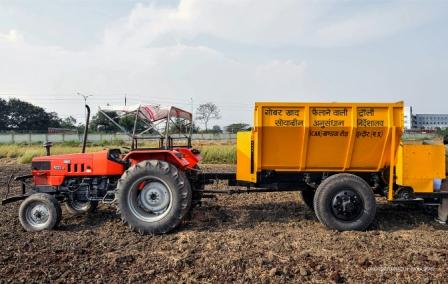
FIRBS machine for vertisols
A tractor drawn ridge and furrow maker coupled with sowing mechanism for soybean crop for vertisols was developed. The system consists of an array of alternating ridges and furrows. The ridges are about 20cm high and 75 cm apart.This tractor drawn equipment can form two full and two half ridges on which simultaneously six rows of soybean can be sown. For successful use of this equipment deep tillage followed by heavy planking before the onset of monsoon is crucial for the formation of effective ridges. Higher frame clearance was provided to avoid clogging of ridgers and frame.The machine is so developed herein sowing is carried after complete formation of raised bed simultaneously.
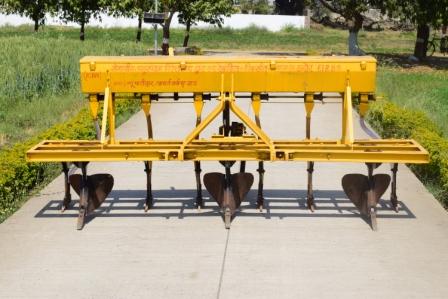
In-siturainwater conservation can be carried out either through land configuration or adoption of suitable tillage practices or through mulching. To validate the equipment field experiments were conducted during Kharif of 2002 and 2003 on Sarol series(montmorollinitic, iso hyperthermic, typic chromusterts) and compared with commonly followed practice (flat bed). The results of the study revealed furrow irrigated raised bed sowing machine forin-situ rainwater management provided an 32% yield advantage over flat bed method and can be recommended for increased soybean productivity.
Cross mechanism
Cross mechanism devised is very useful for checking or elimination of lateral movement of seed drills and other equipments. This mechanism is easy to fit and detach to and from lower links of tractor. This equipment has an edge over the check chains, which are partially effective in straight row operations. Using this simple device, the straight row planting and further operations using tractors are facilitated. The crop loss during weeding through interculture in standing crop using check chains could be brought down to 3-4%. Local artisans at meager price of Rs 80 could manufacture this simple device easily. It is always better to get this device manufactured for individual tractors for better fitment
Seed Coverer
Coverage of seed with the help of this device fitted to the tine of the seed drill helps to provide congenial environment to the seed for germination and emergence. This method of putting soil over the dropped seed allows moisture and oxygen to approach the seed under the covered soil. This is one go sowing machine for soybean without any other preparatory operation after summer ploughing.The device is 16 cm wide and 25 cm high. Inverted V notch with base of 10cms pushes the soil over the seeds for proper coverage. Normal planting results in 7-13% uncovered seed, which normally do not aid to plant stand. The device permits total coverage of exposed seeds normally results in normal planting. The device also helps in proper germination of bold seeded variety even if there is shower just after sowing.
Research Achievements of Computer Applications
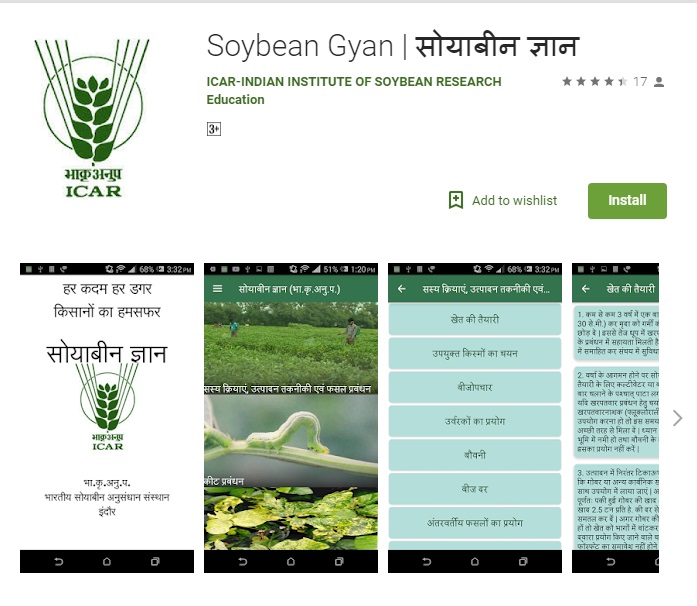
Soybean Gyan-AI Powered Mobile App is developed for providing information about different aspects of Soybean Farming, production and protection technologies. It is developed to provide a multi-lingual user interface viz. Hindi, English, Marathi, Tamil and Telugu looking to the farmers’ understandability. It has menu-options for intelligent features like AI based Disease and Pest diagnosis system and AI-Chatbot. It has navigation to YouTube channel of ICAR-NSRI for better practical experience of soybean technologies through videos. It also has options for farmer advisory system, good agricultural practices, weekly farmer advisories and mandi-rates. It is very useful for soybean cultivators and other stakeholders. for free download from Google play store -> Google Link.
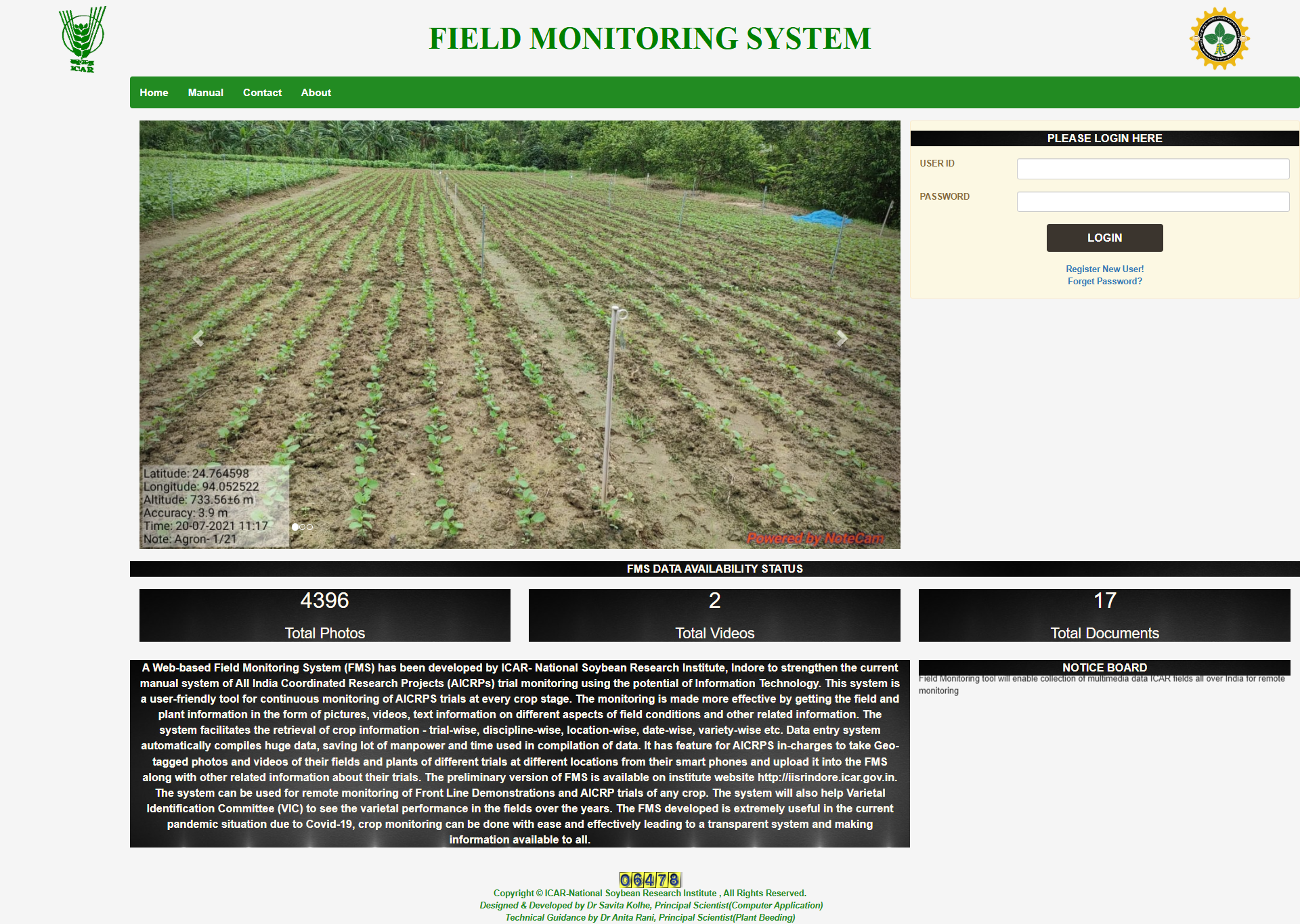
The Field Monitoring System is developed for remote monitoring of field trials. It provided a facility for continuous monitoring of field trials at every crop stage without physically visiting that location. It is designed in such a way that it can be used for other crops also. It helped the users to get the field and plant information in the form of geo-tagged pictures, videos, text information on field conditions and other related information remotely. It is also useful for Varietal Identification Committee (VIC) to see the varietal performance in the fields over the years for taking decision on identification of an entry for release. It facilitates the retrieval of crop information - trial-wise, discipline-wise, location-wise, date-wise, variety-wise etc. The system has made the field monitoring process highly cost effective, user-friendly and lead to a transparent system making the information available to all.
A Web-based Soybean Insect Identification and Management System has been developed for identification and management of Soybean insects. It provides information on different aspects of soybean insects viz. economic losses, pre-disposing climatic condition for insect attack, seasonal incidence of soybean pests during kharif season, friendly-insects of soybean and insect management recommended practices in Hindi language. It is developed using ASP.NET and SQL at backend. It is very useful for farmers in taking right decision at right time in their fields. It served as an effective IT tool for farmers to take appropriate and timely measures to minimize field losses due to insect attack.
A Web-based Soybean Germplasm Information System (WBGIS) has been developed. It provides an easy, efficient and user-friendly tool for the accurate and rapid retrieval of the information on different germplasm accessions. The system is developed using web technologies viz. ASP.NET, Hyper Text Markup Language(HTML), JAVA etc.
A Web-based Expert System for disease diagnosis in Soybean has been developed. It is based on fuzzy-logic Inferencing. It is developed using ASP .NET web technologies. It diagnoses the disease based on the symptoms observed by the user on the field at a particular crop age, applies the appropriate disease rules stored in disease Knowledge base and using the fuzzy-logic based inferencing method, it draws conclusion. It suggests an appropriate control measure based on the diagnosed disease.
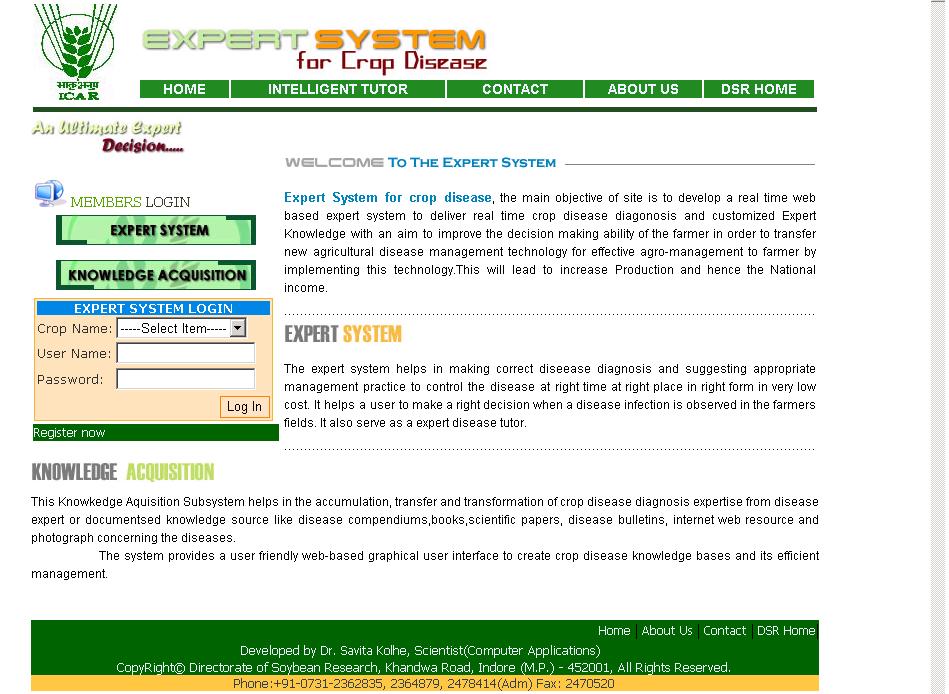
A Knowledge Acquisition System has been developed as a sub-system of Disease Expert System. It provides a graphical user interface to create the disease knowledge base of any crop. At present, it has disease knowledge on 25 soybean diseases. It is developed using ASP .NET web technology. The Knowledge base is implemented using SQL Server.
An Intelligent Disease Tutor System has been developed as a sub-system of Disease Expert System. It acts an Audio-visual training tool to provide complete knowledge on 25 major soybean diseases.
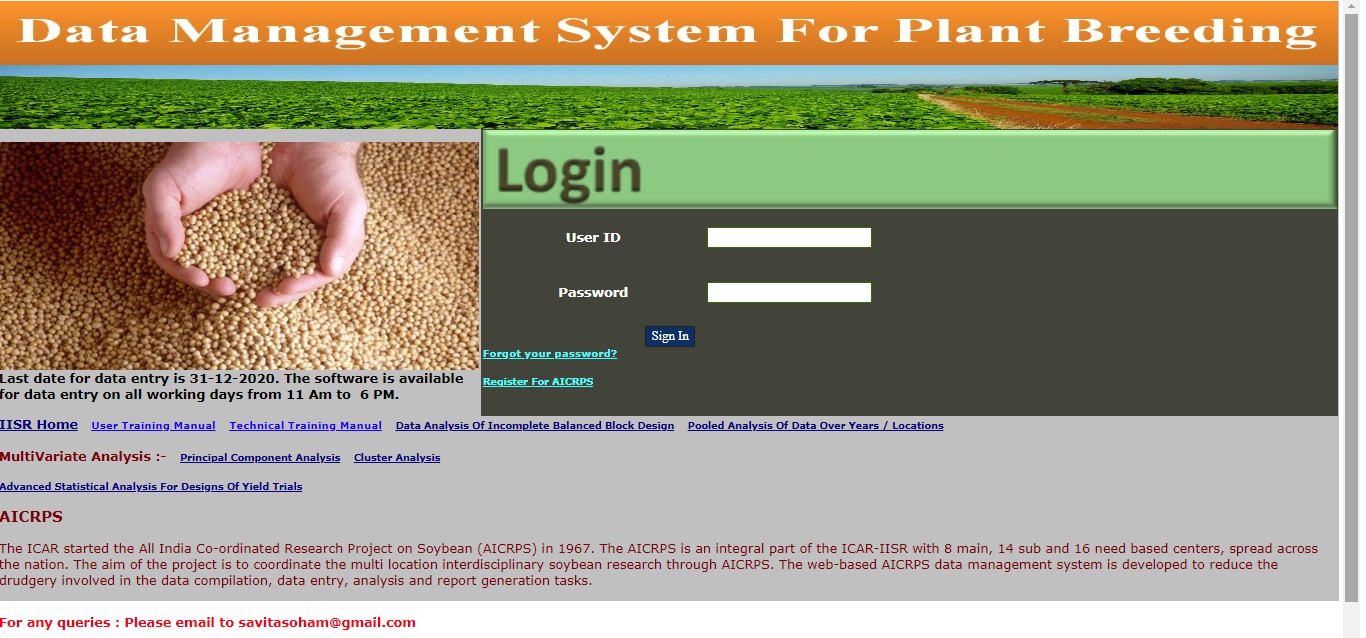
Database Management system for AICRPS trials data has been developed with an aim to reduce the processing time and drudgery involved in the compilation of data and preparation of AICRPS Annual Workshop Report.
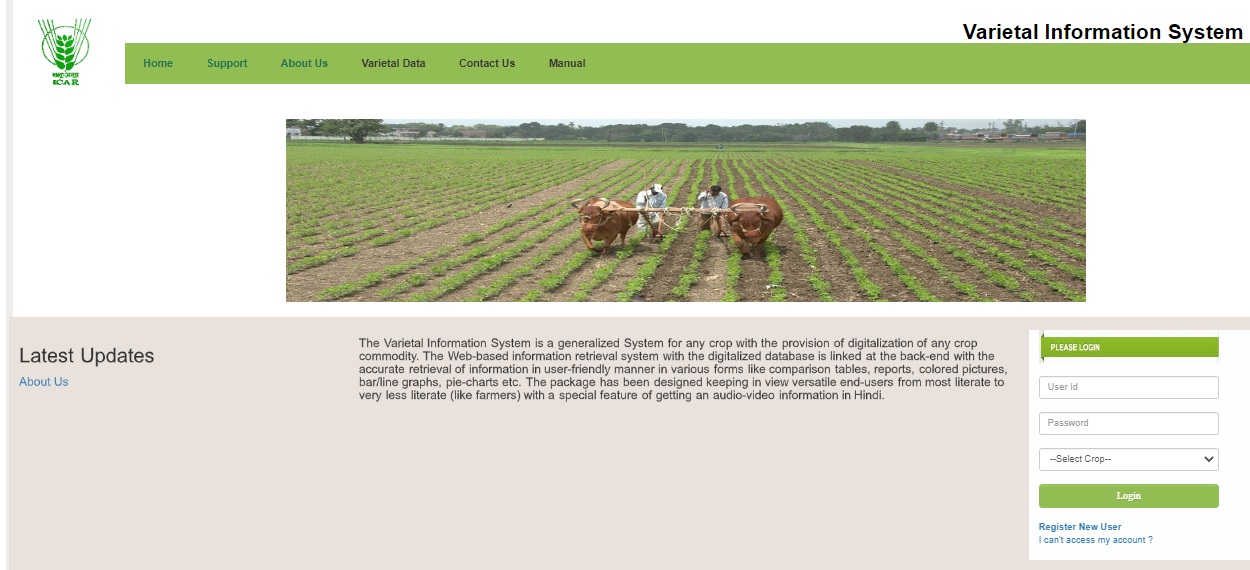
Web-based Varietal Information System has been developed to retrieve quickly and accurately the morphological character information of Indian Soybean varieties in a very user-friendly way. It also facilitates DUS testing.
A Farmer Advisory System is developed to help the farmers to get the expert advice of the soybean experts. It facilitates sending of expert advice through SMS on farmers mobile phones. Farmers can also send their farm related problems to the soybean crop experts.