Director's Desk
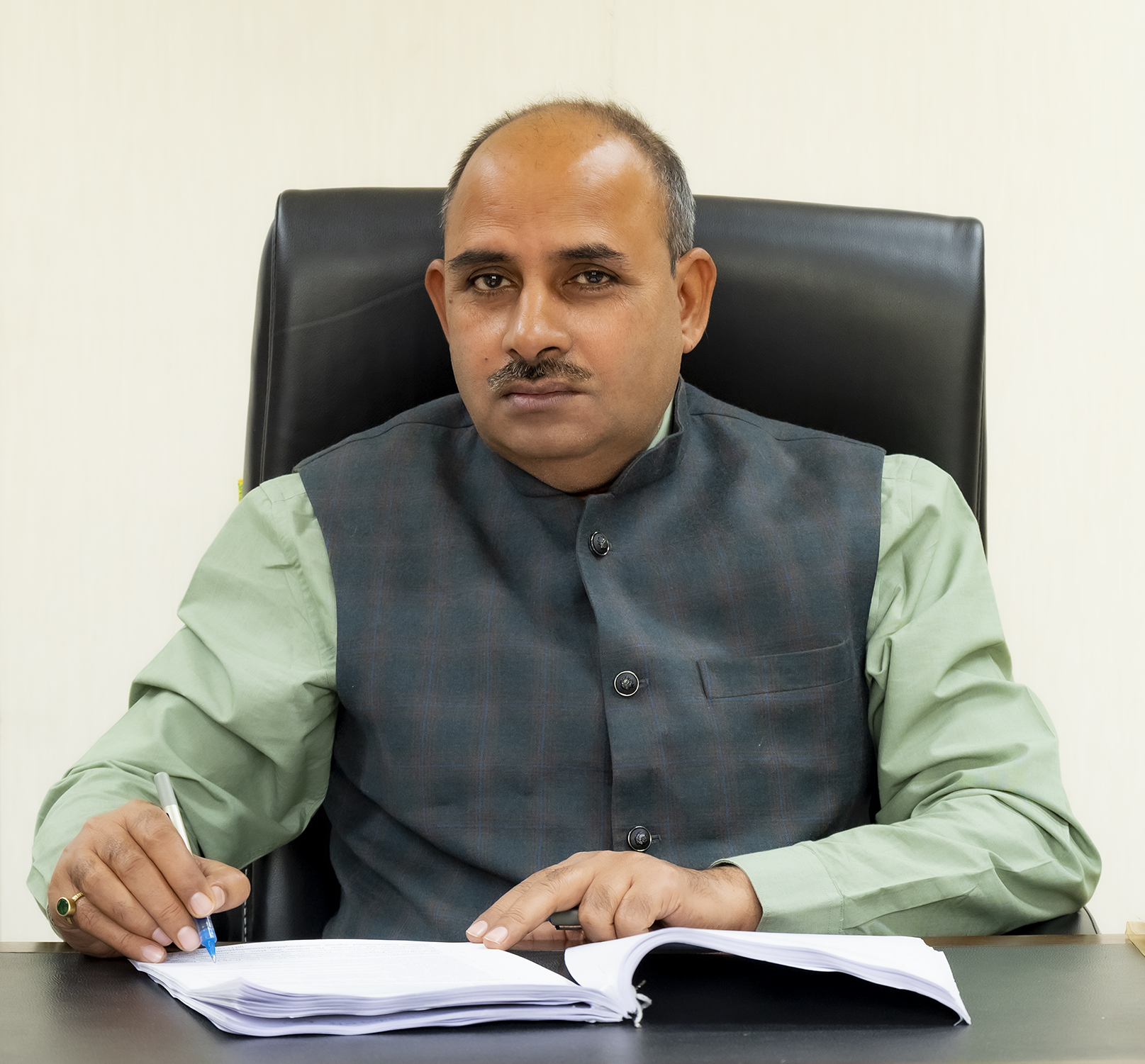
Dr Kunwar Harendra Singh
Soybean (Glycine max L. Merrill) has emerged as the most important oilseed crop in India, contributing significantly to edible oil security, livestock feed, and industrial applications. Cultivation has expanded remarkably from just 30,000 ha in 1970 to nearly 12.9 million ha in 2024, with production reaching 15.1 million metric tonnes.The crop has a long history of cultivation in the Himalayan hill states, where it has been grown traditionally for centuries, but its importance rose tremendously during the 1970s when it was introduced in central India as part of the oilseed revolution. Today, soybean is valued for its protein-rich meal, edible oil, and versatile derivatives, making them integral to food, feed, and industrial sectors. It has become the largest oilseed crop in India with cultivation concentrated in Madhya Pradesh, Maharashtra, and Rajasthan, which together account for over 85% of the national area.
Despite its remarkable spread, productivity remains below potential. National average yields stagnate around 1100–1200 kg/ha compared to the global average of over 2700 kg/ha, and wide disparities exist across states, ranging from as low as 900 kg/ha in some regions to 1884 kg/ha in others. Madhya Pradesh, the leading soybean-growing state, contributes the largest acreage but lags in productivity, whereas states such as Telangana and Gujarat achieve relatively higher yields owing to better adoption of technology and crop management practices. Soybean, originally adapted to temperate–subtropical regions of China, is grown in India under subtropical to tropical conditions, primarily during the kharif season. Its photoperiod sensitivity restricts cultivation largely to this period, while rainfed farming exposes the crop to drought, waterlogging, and high temperature stress. Sensitivity during the flowering and pod-filling stages often results in significant yield loss. Low organic carbon levels in Indian soils, along with intensive cropping and monocropping of soybean, have further degraded soil health. In vertisols, problems of poor drainage, subsoil compaction, and micronutrient deficiencies such as iron, zinc, calcium, molybdenum, and sulphur constrain productivity. Continuous soybean cultivation in the same systems has also led to disease buildup, breakdown of resistance in popular varieties, and management challenges during prolonged monsoons when frequent rains prevent the timely application of plant protection measures. The lack of effective control options against major diseases continues to worsen the situation.
Soybean’s unique composition, with about 40% protein and 20% oil, makes it a highly versatile crop for value addition. The demand for soy protein extraction and processing machinery in India is projected to grow at a rate of 12% annually, driven by the increasing popularity of health-focused soy protein products. Farmers participating in local soy processing for products such as soy flour, textured soy protein, soy milk, and tofu can earn 15–20% higher incomes. Processing units established through farmer cooperatives, supported by schemes such as the Agriculture Infrastructure Fund and PM-Kisan Yojana, provide opportunities for decentralized value addition. Beyond processing, soybeans offer diversification into vegetable soybean (edamame), fermented products, soy sauce, protein concentrates, health foods, refined high-oleic oils, lecithin for food, pharma, and cosmetics, and even industrial derivatives such as biofuels, bioplastics, inks, lubricants, and adhesives. Historically dominated by soy meal, India’s soybean exports now require diversification toward premium products to stabilize performance and enhance competitiveness.
Enhancing productivity requires a comprehensive research and policy agenda. Research priorities include breeding for multiple disease resistance, marker-assisted introgression of yellow mosaic virus resistance into high-yielding varieties, developing varieties tolerant to drought and waterlogging, utilizing kairomones in pest management, and deploying resource-conserving practices such as straw mulch and life-saving irrigation. Policy actions should focus on strengthening seed hubs across agro-climatic zones, creating direct linkages between farmers and processors to bypass intermediaries, mainstreaming soybean into national nutrition schemes, establishing retail outlets for farmer-producer organizations engaged in soy food products, and promoting sustainability frameworks, including soil health cards and application of biological control agents like Trichoderma, Bacillus subtilis, and Pseudomonas. Further interventions are required to enhance varietal replacement rates, ensure the timely availability of quality seed, create incentives for soya-based MSMEs, and promote consumer awareness of soy foods through mass media. Development of cost-effective, energy-efficient machinery for protein concentration, extrusion, and packaging should be prioritized by entrepreneurs and equipment manufacturers.
Future growth must be yield-driven, with targets to raise average productivity to 1700 kg/ha by 2030 and 3000 kg/ha by 2047, translating into production levels of 22.1 million tonnes and 40.5 million tonnes, respectively. This would contribute significantly to India’s edible oil pool and efforts toward malnutrition eradication, while also expanding genetic resources for combating emerging diseases, developing specialty soybeans for food-grade and industrial uses, promoting organic and resource-conserving technologies, and strengthening secondary agriculture and soybean-based enterprises. Soybean cultivation in India has transformed from a minor hill crop into a national oilseed powerhouse occupying nearly 13 million hectares. Addressing climatic risks, soil fertility issues, seed system inefficiencies, market barriers, and disease pressures, while simultaneously tapping into value addition and premium export markets, presents an unprecedented opportunity. A holistic approach that integrates genetic improvement, improved agronomy, efficient seed systems, modern processing infrastructure, and supportive policies can bridge the productivity gap. With targeted efforts, India can achieve the ambitious yield goals of 2030 and 2047, ensuring not only farmer prosperity but also national food, nutritional, and industrial security.